Borrowed Fame: How HYIP Operators Weaponize Celebrity Identities to Manufacture Investor Trust
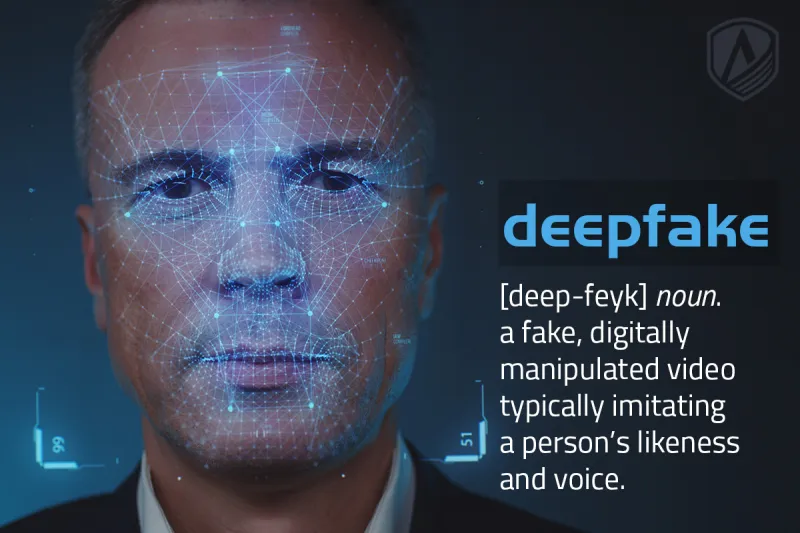
Photo: deepfake celebrity face on screen digital fraud concept, via cdn.prod.website-files.com
When a polished video clip surfaced last year appearing to show a well-known American entrepreneur enthusiastically endorsing a high-yield cryptocurrency platform promising 3% daily returns, thousands of viewers shared it without question. The production quality was professional. The voice matched. The mannerisms were convincing. The investment platform, however, was a textbook HYIP — and the celebrity had never recorded a single second of that footage.
The clip was a deepfake, and the investors who wired funds based on it had no straightforward path to recovery.
This is not an isolated incident. Across monitoring databases maintained by AllHYIPs Monitor and corroborated by Federal Trade Commission complaint filings, celebrity-impersonation fraud has become one of the most reliable recruitment mechanisms in the modern HYIP operator's toolkit. Understanding exactly how it works — and why conventional verification instincts fail against it — is now essential knowledge for any US investor operating in digital asset spaces.
The Technology Behind the Illusion
The barrier to producing convincing synthetic media has collapsed dramatically over the past three years. Tools that once required Hollywood-grade computing infrastructure can now be operated by individuals with modest technical backgrounds and a few hundred dollars in software subscriptions.
Deepfake video generation works by training a neural network on existing footage of a target individual — material that exists in extraordinary abundance for any major celebrity. Once trained, the model can map a source actor's facial movements onto the target's likeness with sufficient realism to pass casual inspection. Audio cloning follows a parallel process: given as little as three minutes of recorded speech, commercially available voice synthesis platforms can generate new sentences in a convincing approximation of the original speaker's voice.
HYIP operators combine these capabilities with professionally designed landing pages, fabricated news article screenshots, and coordinated social media amplification. The result is a layered false-credibility architecture in which the celebrity endorsement serves as the emotional anchor — the element most likely to override a prospective investor's skepticism.
Purchased Accounts and Platform Impersonation
Deepfake video is only one vector. A parallel tactic involves the acquisition of aged social media accounts — profiles with years of posting history and substantial follower counts — that are then rebranded to impersonate a celebrity's official presence. These accounts are openly traded on dark web marketplaces, with pricing that scales according to follower volume and account age.
Once acquired, operators make cosmetic modifications: updating the profile photo, display name, and bio to mirror a target celebrity's verified accounts closely enough that a non-attentive user will not notice the absence of a verification badge. Posts endorsing the HYIP platform are then published from these accounts and amplified through coordinated engagement networks — rings of bot and low-wage human accounts that inflate like and share counts to simulate organic enthusiasm.
The FTC's 2023 consumer protection data indicated that impersonation scams — a category that includes celebrity impersonation in investment contexts — resulted in reported losses exceeding $1.1 billion from US consumers in a single year. The actual figure is almost certainly higher, given the persistent underreporting that characterizes investment fraud across all demographics.
Why Verification Fails
The instinctive verification response most investors apply — searching for the celebrity's name alongside the platform — is precisely the mechanism that sophisticated HYIP operators have learned to defeat. Search engine optimization campaigns seed results with fabricated positive coverage. AI-generated press release content, distributed across low-authority news aggregator sites, creates a surface layer of apparent legitimacy that populates early search results.
Furthermore, the psychological dynamics of celebrity trust complicate rational assessment. Decades of advertising research confirm that parasocial relationships — the one-sided familiarity audiences develop with public figures through repeated media exposure — generate genuine emotional responses that function similarly to personal endorsements from trusted acquaintances. When a face a person has watched for years appears to vouch for an investment, the cognitive machinery that would otherwise scrutinize a stranger's claims is partially disarmed.
Platform-level verification systems offer incomplete protection. Blue checkmarks on major social networks have become less reliable indicators of authenticity following policy changes at several major platforms. Verified status can, in some cases, be purchased or inherited through account acquisition.
Specific Warning Signs for US Investors
AllHYIPs Monitor has identified a consistent pattern of markers that distinguish legitimate celebrity involvement in financial products from HYIP impersonation campaigns. US investors should treat the following as immediate red flags:
Exclusive or hard-to-find promotional content. Authentic celebrity endorsements of regulated financial products involve formal disclosure requirements under FTC guidelines and are typically announced across multiple official channels simultaneously. An endorsement that exists only as a single video circulating through Telegram groups or private Discord servers has almost certainly not passed through any legitimate commercial arrangement.
Returns language in the promotional material. No legitimate financial endorsement by any public figure will specify guaranteed percentage returns. The moment a purported celebrity endorsement includes specific yield figures — daily, weekly, or monthly — the content is operating outside the boundaries of what any regulated investment product can legally promise.
Urgency framing. Authentic investment opportunities do not expire within hours. HYIP promotional content featuring celebrity likenesses almost invariably incorporates countdown timers or limited-availability language designed to compress the window between initial exposure and financial commitment.
No corroboration from official channels. Any investment platform claiming a celebrity partnership should be verifiable through that celebrity's official, independently verified social media presence, their management agency's public communications, or credible financial press coverage. Absence of such corroboration is disqualifying.
Requests for cryptocurrency-only deposits. Legitimate investment vehicles accessible to US retail investors accept standard payment methods. Platforms that exclusively accept cryptocurrency transfers — particularly privacy coins — are structuring their intake to maximize the irreversibility of any funds transferred.
Reporting and Recourse
US investors who encounter celebrity-impersonation HYIP campaigns have several reporting channels available. The FTC's ReportFraud.ftc.gov portal accepts complaints that feed into law enforcement referral networks. The FBI's Internet Crime Complaint Center (IC3) specifically handles online fraud reports and maintains data that informs federal investigation priorities. Additionally, the SEC's online tip submission system is appropriate when the fraudulent content involves securities-adjacent language.
Investors who have already transferred funds face a considerably narrower set of options, particularly when transfers were made in cryptocurrency. Prompt reporting remains advisable, however, as aggregated complaint data occasionally supports broader enforcement actions even when individual recovery is not feasible.
The celebrity whose identity was exploited is, in virtually all cases, a victim as well. Many public figures now employ dedicated teams to monitor for unauthorized use of their likeness in financial fraud — a development that reflects just how industrialized this form of deception has become.
The Underlying Calculus
HYIP operators deploy celebrity impersonation because it works with measurable efficiency. A fraudulent platform that recruits investors through anonymous promotional copy must overcome fundamental credibility deficits. The same platform, wrapped in the apparent endorsement of a recognizable and trusted public figure, converts prospective investors at dramatically higher rates. The incremental cost of producing synthetic media is negligible relative to the capital it unlocks.
For investors, the practical implication is straightforward: the presence of a famous name in investment promotional material should trigger heightened scrutiny, not reduced skepticism. In the current technological environment, celebrity endorsement is among the least reliable signals of legitimacy an investment platform can offer — and among the most reliable signals that something warrants careful investigation before a single dollar changes hands.